
Clark County Busted Mugshots: What Records Mean
People search for "busted mugshots" expecting a gallery. Illinois has no such thing. What exists instead is a paper trail with clear steps. An officer makes an arrest, the jail takes the person in, and a booking entry gets created, sometimes with a photo attached. VINE may show a custody result once its system catches up. Court events come later through the circuit clerk and live in a separate record entirely.
Several agencies can start that process in Clark County. An arrest might begin with the Marshall Police Department, the Casey Police Department, Martinsville police, or the sheriff's office. The Clark County Sheriff runs the county jail and points people toward Illinois VINE, the strongest tool for current custody questions. It will not guarantee a photo for every arrest, though. Nor will it show every city arrest that never reached the jail.
A useful record trail reads: arrest, county-jail receipt if transferred, booking and possible photo, current or recent custody result, court case, then disposition. A missing result is not proof that no arrest occurred. The person may have been released, transferred, entered under a different spelling, or covered by a confidentiality rule. Keep the source label, the page’s own date, and the time checked with any record note.
Clark’s official material does not publish a web gallery, a photo cadence, or a fixed retention period. The lack of a public image is therefore a finding, not a gap to fill with a private copy. The current route is the sheriff, VINE, the originating police department, the court, and a narrow written request when an exact record is needed.
The sheriff’s public page is the best starting point for the county system. It identifies the jail and connects the custody question to the Clark County VINE route, while the statewide Illinois VINE application provides the broader search entry.
Note: A public custody result and a court disposition answer different questions, so keep both source types and their check dates separate.
The official sheriff page gives the jail address as 207 N. 5th Street, Marshall, Illinois 62441, and the telephone as 217-826-6393. The jail is a custody source, not a public list of people. For an emergency use 911. The county’s E-911 page lists 217-826-3279 for non-emergency dispatch and 217-826-3339 for business contact. Those numbers help route a safety or agency question, but dispatch is not a booking database.
Clark County Busted Booking Fields
Illinois’ arrest-information rule gives a useful baseline for what an agency may furnish, subject to exceptions. A Clark County booking or arrest record can include the person’s name, age, address, charges, arrest time and place, arresting or investigating agency, custody dates when the person is incarcerated, and a photograph when and if available. A live public schema was not found, so a field listed in law is not the same as a column visible on VINE.
Read each field as a snapshot. “Charge as booked” means the allegation recorded at intake. It does not mean a judge found the person guilty. An arrest time is not the same as a jail-receipt time, a VINE posting time, or a court hearing time. When a court case is found, cite it as a later record. Do not backdate a dismissal, plea, or sentence into the original arrest description.
| Field | What it can show in Clark records |
|---|---|
| Full name | The name used by the agency or custody system. Check spelling against the originating office. |
| Age or birth detail | Age is described by 5 ILCS 140/2.15. A full birth date is not assumed. |
| Address | An address listed in arrest information, subject to lawful redaction or exception. |
| Booking or jail ID | Not confirmed on a public Clark interface. Request it only if the jail maintains and can release it. |
| Arrest date and time | When the arrest was recorded. It is not automatically the booking or posting time. |
| Arrest location | The place recorded by the agency, which may be withheld under an exception. |
| Arresting agency | The police or sheriff agency identified in the record. |
| Charge as booked | The alleged offense at arrest. Use charge language until the court record says more. |
| Photograph | Available when and if available under the statute. A public Clark photo field was not confirmed. |
| Custody received date | When the county jail received a person who was incarcerated there. |
| Release or transfer date | A discharge, release, or transfer event when the responsive record contains it. |
| Bond or conditions | Not confirmed as a current public VINE field. Check the booking or court record instead. |
| Case number and hearing | Usually court follow-up, confirmed through the clerk or Judici rather than assumed from booking. |
| Disposition | A later court result, not a booking field. Identify the court source and date. |
| Source timestamp | The time the result was checked. VINE and private pages can change after that. |
The Illinois arrest-information statute says a photograph is furnished only when and if available. That wording matters in Clark County because no current public photo policy was verified. It also keeps the search honest: the right answer may be that a record exists but a public image was not confirmed.
Note: Court, case number, hearing date, and disposition should be labeled as court follow-up, not silently folded into an arrest record.
Request a Clark County Booking Photo
When VINE does not answer a records question, use the originating agency and the sheriff’s jail contact in a narrow written request. The sheriff page does not identify a dedicated current booking-photo form or records officer. It does publish the county contact, and the 2024 Illinois DOC jail inspection identifies Jail Administrator Jay Sharp at jail.administrator@clarkcountyilsheriff.gov. Confirm the current delivery method before sending a sensitive request.
A request can ask for an electronic copy of the arrest or booking record for a named person or incident over a stated date range. Ask for the arrest information described in 5 ILCS 140/2.15 and for a photograph when and if the agency maintains one and can release it. Ask the agency to release segregable portions and cite an exemption for anything withheld. Do not request juvenile or sealed material.
- Identify the person or incident, arresting agency, exact date range, and record type. A focused request is easier to locate than a request for every image ever made.
- Send the request in writing to the sheriff or the city agency that made the arrest. Marshall provides a city FOIA application; Casey provides a police FOIA form and fax route.
- Ask for electronic delivery and state that a releasable booking photograph should be included when one exists. Ask for the legal basis of any redaction or denial.
- Track receipt. Illinois FOIA generally gives a public body five business days to respond, with a possible five-business-day extension when the statutory notice applies.
- Compare the response with VINE and the court record. The photo, custody status, charge at arrest, and later disposition may come from different custodians.
Clark County Sheriff and Jail
William D. Brown, Sheriff
207 N. 5th Street
Marshall, IL 62441
217-826-6393
Records and jail questions should be confirmed with the office. Sheriff email: bill.brown@clarkcountyilsheriff.gov.
Jail Administration
Jay Sharp, Jail Administrator
Clark County Jail
207 N. 5th Street
Marshall, IL 62441
jail.administrator@clarkcountyilsheriff.gov
Ask which current records channel applies before sending the request.
Sheriff copying runs $5 for a report, $25 for service, and $5 for a return. Add $1 per mile. Those are the posted fees. They are not a confirmed price for a booking photo. Illinois FOIA also sets copying rules of its own, and the total can shift with page count, color, or electronic format. Nail down the exact record and the fee before you count on any number.
City arrests add a wrinkle. Ask the police department for the incident report. Ask the county for custody details. The two agencies hold different records. Casey's police form accepts delivery by hand, mail, or fax to 217-330-5652, though it flags limits on some criminal-history and traffic-accident files. Martinsville lists police and City Hall contacts but no police FOIA form of its own. Often you need both requests.
A records request does not build a public gallery. If a photo is released, keep its source, date, and record context attached to it. Handle anything touching juvenile status, sealing, or expungement with real care.
Illinois Mugshot Rules and Free Corrections
Under 5 ILCS 140/2.15, Illinois says arrest information must be furnished promptly, and no later than 72 hours after the arrest, with exceptions. A photograph is included when available. Read that carefully. It governs how records get furnished, not a promise that Clark County posts every image online within three days or runs a same-day feed.
Juvenile records sit outside this statute entirely. They fall under 705 ILCS 405/5-915, and juvenile booking photos should never be pulled into a private publisher's site. Sealed or expunged adult records deserve the same distance.
Then there is 815 ILCS 505/2QQQ, Illinois' anti-pay-to-remove law. It targets anyone demanding money or other value to remove, correct, or change published criminal-record information, arrest photos included. The sound route costs nothing: submit proof with a free correction request, go to the agency whose record is wrong, or use the courts when that fits.
Section 2.15 also restricts how law enforcement posts booking photos on social-network sites, though public-safety exceptions apply. That limit is not absolute privacy for every photo. A sheriff's silence on social media proves nothing about what records exist. Stick with VINE and FOIA, and skip private reposts as a county source.
Correction warning. Save the URL, the date, the source text, and any court or agency paper. Treat any offer of instant deletion for a fee as a red flag. Illinois' official correction and court routes never require an unknown middleman. Note: keep every piece of evidence together before you contact anyone about a record fix.
Start with the Illinois Courts expungement and sealing forms when a court remedy is the goal. Eligibility turns on the exact disposition, the charge, the sentence, and statutory exclusions. A dismissal, an acquittal, supervision, a conviction, and a sealing order are not the same thing. Once the court or agency record checks out, a private publisher's own free correction policy can be applied to any qualifying local page.
Two such policies exist. Recently Booked's general removal policy covers free requests for dismissals, expungements, sealing, juvenile issues, identity errors, duplicates, and outdated pages. Mugshots.com has a record-maintenance policy offering free updates or removal with documentation. Neither one controls the official county record. No paid service belongs in this conversation.
Note: A court order can change the official legal status without automatically changing every private copy or search-engine snippet.
Keep two things separate: the public-record rule and a publisher's policy. When a record is wrong, the sheriff or police department corrects its own file, and the circuit clerk is the court route. A search engine's outdated-content tool only cleans its index. The underlying record stays right where it was. The Illinois FOIA text is the legal source behind everything in this section.
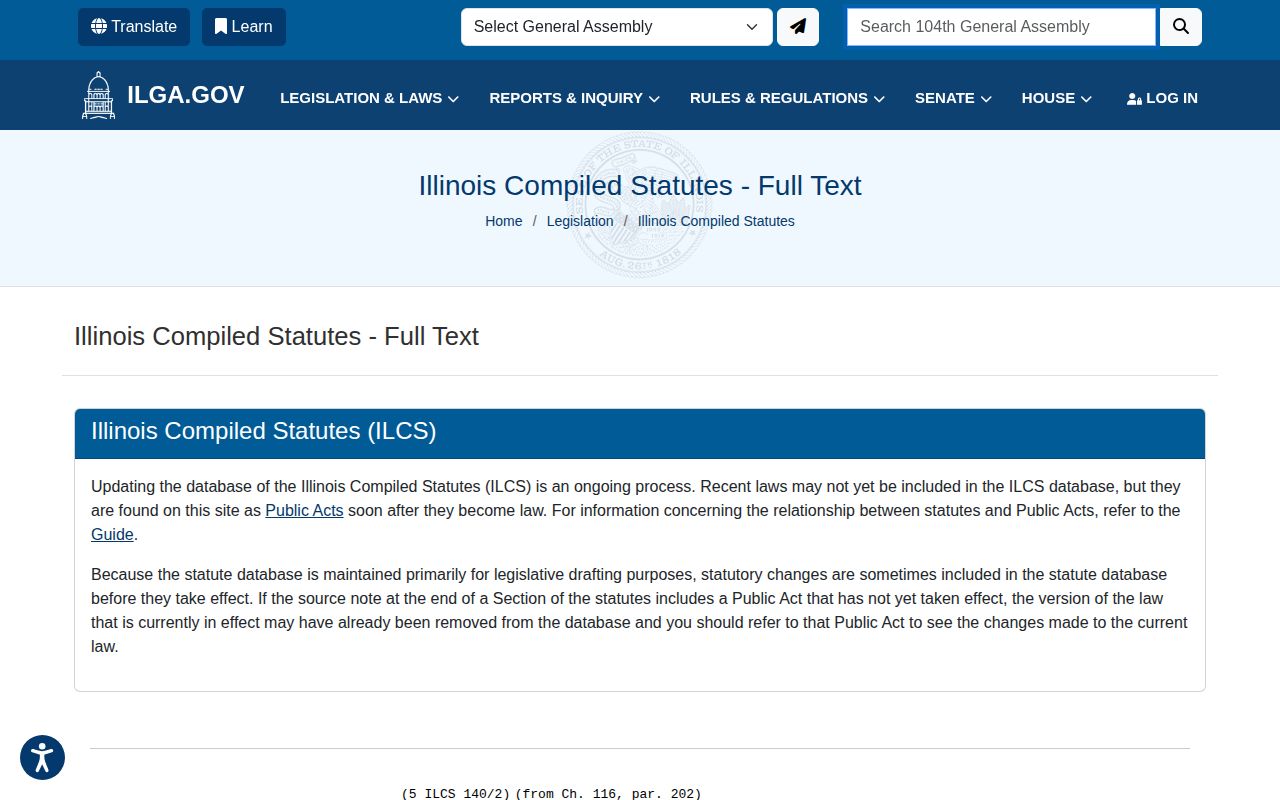
The Illinois FOIA text anchors the statute and correction discussion here. One distinction matters. A statutory access rule tells you what you can request; a county website's display choices tell you what it happens to show.
When a Clark County Record Ages Out
Clark County publishes no schedule for how long booking photos, roster entries, VINE exports, or web pages stick around. The sheriff's site says nothing about when a booking row drops off after release. Whether a photo gets purged, transferred, or kept in an internal file is also unaddressed. So a vanished web result proves nothing. Records outlive their URLs all the time.
The Illinois State Archives records-management page makes the disposal rules plain: local public records cannot be thrown out without proper records-management approval. The Clark holdings search turned up no jail-register or booking-photo series in the database view. IRAD's general sheriff-record descriptions mention jail registers, indexes, jail reports, and visitor registers. That still proves nothing about which series Clark County actually holds.
- Ask the sheriff or jail administrator whether the record class still exists and request the applicable retention schedule or disposition authority.
- Give a narrow date range and record type, such as a booking record, release entry, or arrest report.
- Search the Clark County holdings database, then ask Eastern Illinois University IRAD whether an unindexed sheriff or jail series exists.
- Use the circuit clerk for court events and IDOC’s archived-record route for state-custody material. Neither system automatically supplies a county booking photograph.
Eastern Illinois University hosts the IRAD region for this area. The contact point is Booth Library. That's 600 Lincoln Avenue, Charleston, Illinois 61920, and the phone is 217-581-6093. The archive material lists weekday hours and a call-ahead instruction. Verify current hours and holdings before making the trip. Old jail registers can survive long after a web page dies, so the archive is worth a call.
Find Clark County Busted Mugshots
Order matters here. Each lookup tool answers a different custody question. Someone booked an hour ago may show up in a current VINE result, while a person already released can vanish from that list even though the arrest record itself can still be requested through official channels. A sentenced person sitting in an Illinois state prison belongs in the IDOC system, not the county jail search. Federal or immigration custody takes yet another locator entirely. Match the person's situation to the right tool before assuming anything.
Trust the label a source actually gives you. The Clark sheriff says VINE may list recent offenders processed into the jail, but the county never defines how many hours or days "recent" covers. If the official interface happens to display an exact range, use it. Until then, treat "recent" as vague, because it is.
- Open the sheriff’s page and follow the Clark County link to Illinois VINE. Record the check time and whether the result is current custody or recent processing.
- If VINE does not answer the question, contact the originating city police department or the sheriff and ask about the exact incident, not a general list.
- Request the arrest or booking record under Illinois FOIA when a source copy is needed. Ask about a photograph when and if one is maintained and releasable.
- Check the Clark County courthouse and Judici for case events or dispositions. A docket is not proof of current custody.
- Use the Illinois DOC offender search for state-prison custody or qualifying former state custody, not for a county-jail booking.
- Use the BOP or ICE locator only when the facts point to federal or immigration custody. Neither is a Clark County mugshot feed.
Local news can point you toward a story. It can never stand in for the official record. Marshall Local, WTHI-TV, and the Clark County Post each cover different slices of the county and region. A name might surface in one outlet and not the others. Treat third-party pages as leads worth chasing. A name, charge, date, or photo from an unofficial page only counts once an official source backs it up.
Where Clark County Busted Photos Appear
Clark County's verified public path is a status and notification system. It is not a confirmed photo roster. The table below keeps the official routes first and makes the limits easy to see. A "Photo?" mark means a documented public image field or lawful request path exists. It does not mean every single record comes with a photograph.
| Channel | Photo? | Official? | How to use it |
|---|---|---|---|
| Clark County Sheriff and VINE | Not confirmed on the current public interface | Yes | Check current custody or recent processing through the sheriff’s VINE link. |
| Sheriff records request | When and if available | Yes | Submit a narrow written request for a dated arrest or booking record. |
| City police request | Not confirmed | Yes | Ask the arresting agency for its report and any releasable image. |
| Illinois DOC search | Public booking photo not confirmed | Yes | Use only for state-prison custody or former state custody. |
| Courthouse and Judici | No booking-photo feed | Yes | Check case events and disposition, then confirm important facts with the clerk. |
| Marshall Local, WTHI, Clark County Post | Story-specific, not a daily feed | No, news sources | Use for reporting context and follow the story to the agency or court record. |
| Mugshots.com Clark archive | Historical pages may show images | No | Unofficial historical lead, not current custody. Do not copy or rehost its images. |
| Recently Booked, Busted Newspaper, Arrests.org, Mugshots.zone | No verified Clark public section for most | No | Do not treat statewide coverage or a blocked route as proof of Clark coverage. |
JailExchange carries a secondary Clark County Jail pointer. It can steer you toward the official VINE route, but it is not a primary source in itself. Official channels come before every private page. No third-party local page should be mistaken for a browseable image collection. No unofficial result should be called current without an official check. The Clark County Sheriff's official page is the county source for the jail contact and the VINE link.
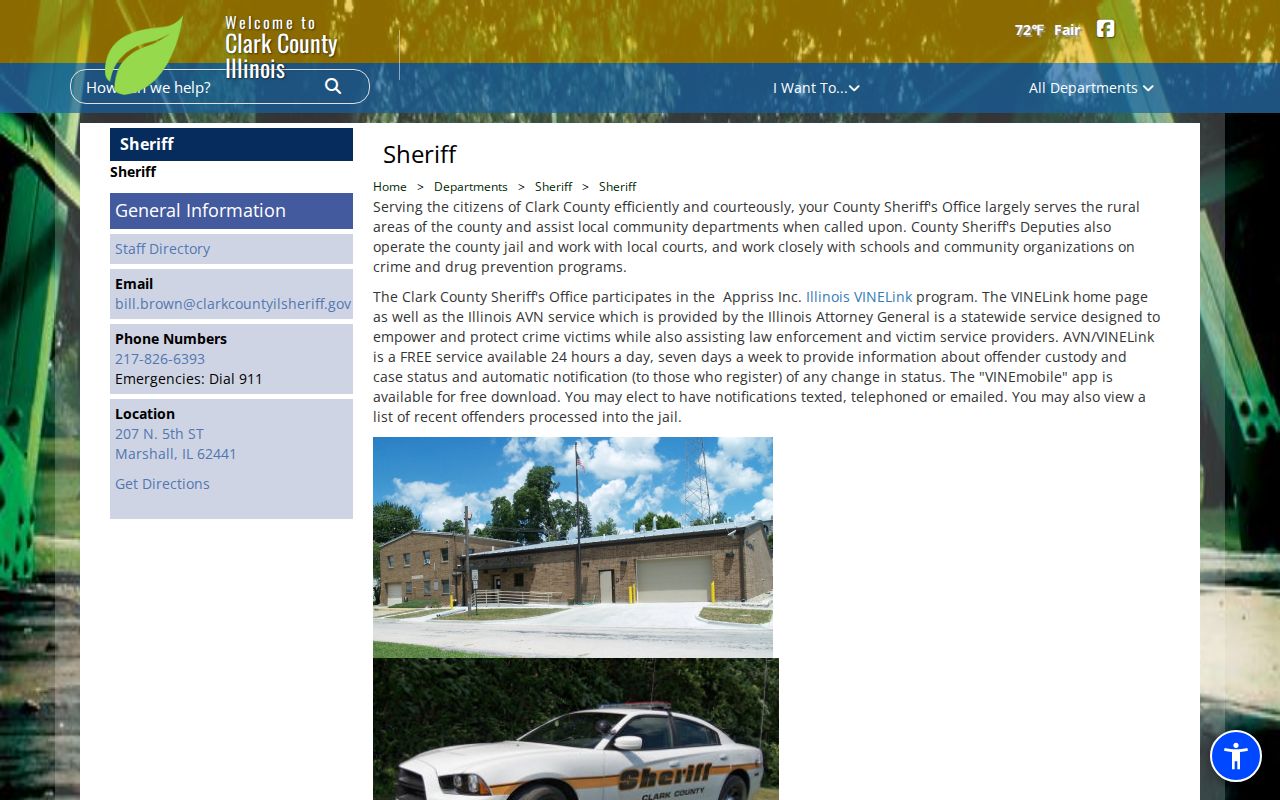
The sheriff's page is the county's home for the jail contact and VINE connection. Think of it as a doorway, not a gallery. It makes no promise that a public image accompanies every booking.
Busted and Booked: Clark County Roster
No live Clark County roster URL has been verified. There is no public field list, booking-number format, image column, pagination, or update schedule. The sheriff sends users to VINE. Recent offenders processed into the jail may be viewed there, the department says. That supports a current-custody and recent-processing workflow, plain and simple. It does not support calling VINE a searchable public mugshot gallery.
Whatever VINE interface is live at the moment is the one to use. When a result appears, note the facility, the source label, the date or time, and the status shown. One result without a photo does not mean the jail never takes photographs. One result with a photo does not add up to a county policy.
Note: Judge the interface by what it displays, never by what a single result implies.
| Search detail | Clark County finding |
|---|---|
| Portal | Illinois VINE reached from the official Clark County Sheriff page. |
| Name search | Use the current fields offered by VINE and preserve the spelling used in the source. |
| Facility or state | Select Illinois and the Clark County facility or option shown by the live interface. |
| Recent offender view | The sheriff says recent processed offenders may be viewable. Clark publishes no fixed date window. |
| Photo field | Not confirmed on the official interface reviewed. Ask the records custodian when a photo matters. |
| Persistence | No public retention period or release-time removal rule was found. |
- Start at the sheriff’s official page and open the Clark County VINE route.
- Choose the Illinois and county options displayed by the current service.
- Search the name or use the recent-offender feature only if it is offered in the live interface.
- Label a result as CURRENT CUSTODY or RECENTLY PROCESSED only when the source supports that label.
- If the result is missing, call the sheriff or request the dated record. A missing result can reflect release, transfer, spelling, system limits, or confidentiality.
The sheriff also points to VINEmobile. Per the Illinois Attorney General, VINE sends alerts by phone, text, email, and mobile app. It can pull county jail, IDOC, and court data into one place. But note what it is not. It is a custody notification tool, not a sheriff-branded photo app. The sheriff's Facebook page plays a similar limited role: announcements, not a full booking stream. For custody status, the official Clark County VINE route anchors this roster discussion.

The Clark County VINE route is the official path for custody questions. Check it at the time of use. It reflects current information. It is not a permanent archive of past bookings.
Note: The old county booking page and booking-calendar JSON path returned 404 on August 20, 2026, so neither is an active roster link.
Recent Clark County Busted Bookings
No separate page exists for today's bookings, the last 24 hours, 48 hours, 72 hours, seven days, or a weekly arrest log. VINE's wording about recent offenders processed into the jail is broader than any of those windows. So rely on whatever current or recent result the official interface displays. Label the window as unspecified unless the interface itself shows a date range.
Illinois' 72-hour furnishing language is a different animal. A law saying arrest information should be furnished as soon as practical does not require a same-day website. It does not require a public photo either. Nor does it demand a page that stays online for a fixed number of days. Any headline promising all Clark County arrests from the last 72 hours would overstate what the county actually provides.
For a same-day question: check VINE first, then contact the sheriff or jail, then the city police department that made the arrest, and submit a narrowly dated FOIA request if a record is needed. For a multi-day question, use the recent-processing feature and compare what the agency and court records show side by side.
If a result vanishes, mark it "not currently shown" rather than "released." That label holds unless VINE or the jail confirms the release outright. A private page still showing an old entry deserves a historical or unverified tag, because persistence there proves nothing about current custody.
The sheriff's old booking calendar and JSON links matter only as evidence of what once existed. They show a booking component was once part of the county site architecture. Both paths now return 404. The proper fallback is VINE plus the records request chain.
Illinois DOC Offender Records Are State Custody
State prison and county jail are two separate worlds. The Illinois Department of Corrections offender search covers only the first. A lookup there can return a last name, an IDOC number, birth date, parent institution, current status or location, and physical details. It may also show admission and release dates, sentencing information, the offense, and the county involved. IDOC itself stresses that county and municipal jail records sit outside this system. Someone arrested in a Clark County city can land in the county jail and later move into state custody, yet no single public record number or booking photo links those stages together.
Do not expect a photo from this tool. The public search showed no booking-photo field. An internal IDOC photo standard does not mean a downloadable image appears in results. Completed sentences may drop out of the current search, and IDOC directs people to request archived records through its contact form. The victim-services page lists the VINE line at 866-566-8439 and notes one narrow option: a Prisoner Review Board photo request for certain felony releases. That is state-custody material, never a fresh county booking photo.
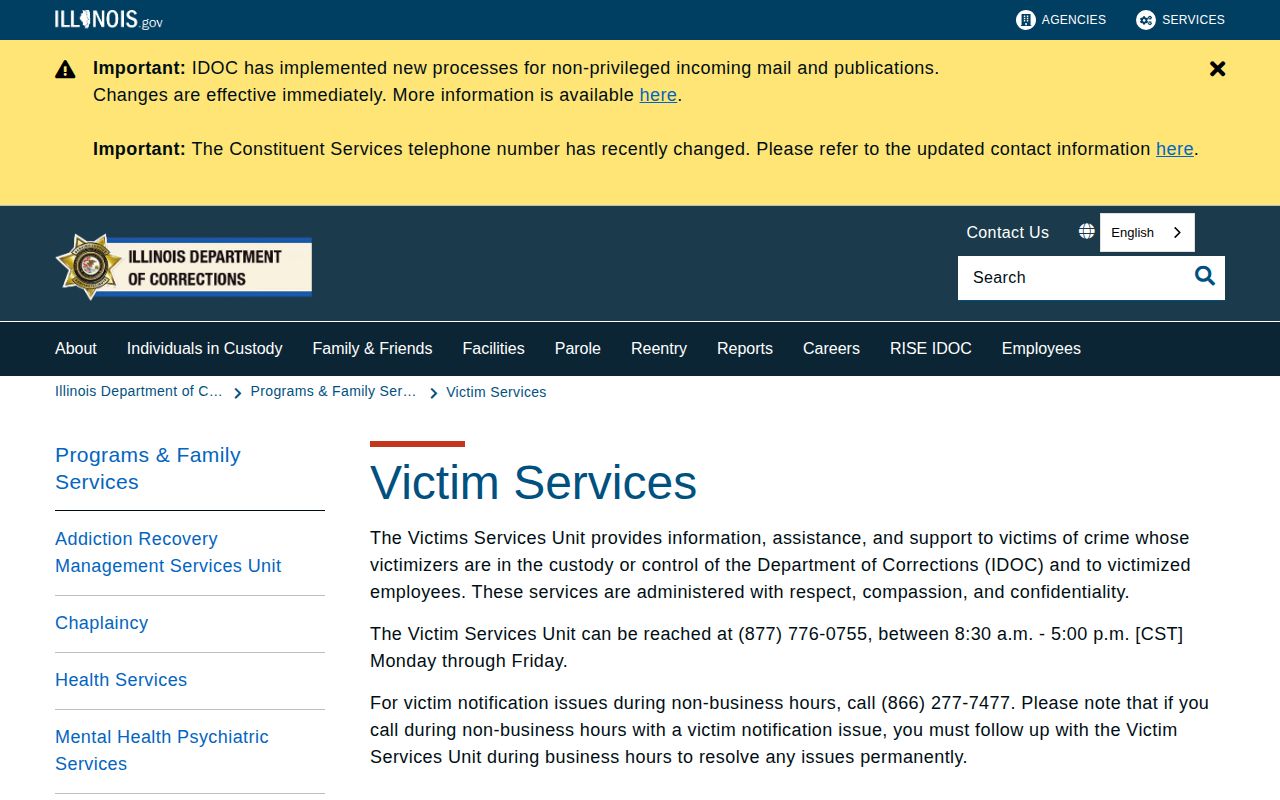
The IDOC victim-services source draws the notification boundary clearly. State notification tools simply are not a Clark County jail roster, and no amount of searching turns one into the other.
Booked, Released, Transferred: Where the Record Lives
Custody status shifts fast. A person held at the county jail today may be released tomorrow. They might be transferred into state custody or picked up by a federal or immigration system. Meanwhile the booking record and the court file can outlive the stay itself. A current roster result can vanish the moment someone walks out the door, so the paperwork and the live listing rarely tell the same story at the same moment.
| Record state | Best source | What it does not prove |
|---|---|---|
| Just booked or in county custody | VINE current result, sheriff or jail confirmation | It does not prove guilt, a final charge, or a public photo. |
| Recently processed | VINE recent-offender feature when offered | It does not promise a same-day or fixed multi-day window. |
| Released from county jail | Booking or release record request, court follow-up | Dropping off VINE does not prove the case ended or was dismissed. |
| Sentenced to Illinois state custody | IDOC offender search and IDOC records route | IDOC is not the county booking system and may not show a photo. |
| Federal or immigration custody | BOP inmate locator or ICE ODLS | A county arrest does not establish federal or immigration custody. |
| Court follow-up | Clark courthouse, circuit clerk, or Judici | A docket result is not a live jail-status confirmation. |
An accurate source can still answer the wrong question. VINE handles current custody status. The sheriff or police department handles records requests, and the circuit clerk handles anything tied to court process. IDOC, the federal Bureau of Prisons, and ICE each govern their own custody systems. Pick the holder that matches the question.
After the Bust: Clark County Court
The court file shows what happened after the booking. The Clark County courthouse sits at 501 Archer Avenue in Marshall, Illinois 62441. Hours run 8:00 a.m. to 4:00 p.m. The phone number is 217-826-8713. Email the circuit clerk at circuitclerk@clarkcountyil.org. The directory also points to online records and Judici. A few terms help. Booking means jail intake. Arraignment is the court appearance addressing the charge. Bond is a release condition. A disposition is the eventual result, whether dismissal, plea, acquittal, or sentence. Expungement is a court-ordered remedy that removes qualifying records from public view, while sealing limits access without erasing the event.
Search Judici by county, name, or case number where available. Verify anything important with the circuit clerk. The First Judicial Circuit FAQ notes that some documents never go online. It also says warrant information cannot be given out by phone. A docket search is neither a certified file nor a live warrant check.
Follow the court file. News stories, booking records, and warrant entries each capture a different stage, and the dated court record is the one that shows what happened after the bust.
- Booking
- Jail intake after an arrest, including identification and record creation.
- Disposition
- The later court outcome, which should be cited separately from the arrest.
- Warrant
- A court-related authorization or order. It is not the same as a booking or wanted bulletin.
- Expungement
- A court remedy that can remove qualifying records from public access under Illinois law.
Busted Mugshots by City in Clark County
City police records and county custody records answer different questions. Each city page keeps that split local. Marshall holds the county seat. It ranks as the largest incorporated city in the sourced 2020 tally. Casey stands out for its clear police FOIA form. Martinsville posts department and City Hall contacts but no public blotter. None of the three runs a verified daily mugshot feed.
- Marshall Busted Mugshots starts with Marshall PD, its 201 S. Michigan Avenue contact, city FOIA form, and county VINE follow-up.
- Casey Busted Mugshots starts with Casey PD, its 217-932-2800 contact, after-hours county dispatch, and the police FOIA form.
- Martinsville Busted Mugshots starts with Martinsville PD at the City Hall contact, county dispatch after hours, and VINE when county custody is confirmed.
The city rankings trace back to the Illinois General Assembly's 2020 Census report, which defines the page set only, not booking counts or any city roster. A city arrest can stay with the originating department, move to the county jail, or take another lawful path, so confirm the destination before assuming where the record lives.
Clark County News and Unofficial Archives
Local news in Clark County is thinner than it once was. Marshall Local covers Marshall, Casey, and Martinsville with a public-safety section, though it is not a daily booking-photo feed. WTHI-TV handles regional crime stories. Clark County Post offers current local context. The Post also notes that the Marshall Advocate and Casey-Westfield Reporter both closed at the end of May 2025. That explains why older coverage often lives in print or library archives rather than online.
The historical Mugshots.com Clark County page is an unofficial archive. Year filters run from 2011 through 2021. Treat it as a historical collection, not a current roster. It says nothing about who is in custody now. JailExchange is another pointer toward the county jail and the VINE route. Busted Newspaper, Recently Booked, Arrests.org, and Mugshots.zone have no verified current Clark County page.
Here is a sensible approach. Use a news article to find an incident. Then confirm details through the agency record, VINE status, and court disposition. Never copy a face from a private page or turn an article into a mugshot listing. The Mugshots in the News page walks the local outlet trail and the path from a story to an official record.
Note: News coverage can arrive after an arrest and can omit a photo, a charge change, or the later court result.
VINE Alerts for Clark County Custody Changes
Illinois VINE is the best alert channel for custody changes. The Illinois Attorney General offers free notifications by phone, email, text, and mobile app. Coverage includes both custody and case status. The system can tie together county jail, IDOC, and court information. Clark County users can start from the sheriff's local link for the county-directed entry point.
VINE works best alongside the sheriff, a police records officer, a clerk, or an attorney. It never replaces them. A missing alert proves nothing either way. Depending on the record connection, a status may reflect county jail, state custody, or a court event. The official source is the Illinois Attorney General's VINE page.
The Illinois Attorney General VINE explanation lays out how the notification system works. Status labels and check times matter most. Preserve them exactly as the system presents them.
Keep a simple source note for anything you rely on: query date, URL, source date or time, agency, status label, and the next official verification step. That small habit keeps a stale page from turning into a false claim about current custody.